Publications
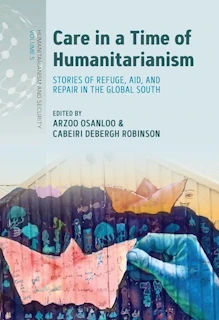
Care in a Time of Humanitarianism: Stories of Refuge, Aid, and Repair in the Global South
The vast majority of forced migrants & refugees seek shelter and respite in countries of the Global South, where humanitarian spaces and practices of care are no exceptions to international humanitarianism but rather part of a project founded on hybrid forms of care that include local and vernacular practices. Care in a Time of Humanitarianism presents complex histories of forced migration and humanitarianism in an accessible way. It applies a comparative approach to highlight the diverse cultural and religious traditions of care that are adopted across the Global South for the "distant others".
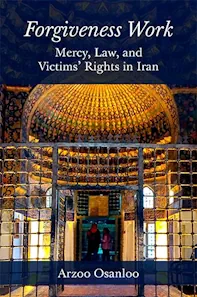
Forgiveness Work: Mercy, Law, and Victims' Rights in Iran
Iran's criminal courts are notorious for meting out severe sentences—according to Amnesty International, the country has the world's highest rate of capital punishment per capita. Less known to outside observers, however, is the Iranian criminal code's recognition of forgiveness, where victims of violent crimes, or the families of murder victims, can request the state to forgo punishing the criminal. Forgiveness Work shows that in the Iranian justice system, forbearance is as much a right of victims as retribution. Drawing on extended interviews and first-hand observations of more than eighty murder trials, Arzoo Osanloo explores why some families of victims forgive perpetrators and how a wide array of individuals contribute to the fraught business of negotiating reconciliation.
Based on Qur'anic principles, Iran's criminal codes encourage mercy and compel judicial officials to help parties reach a settlement. As no formal regulations exist to guide those involved, an informal cottage industry has grown around forgiveness advocacy. Interested parties—including attorneys, judges, social workers, the families of victims and perpetrators, and even performing artists—intervene in cases, drawing from such sources as scripture, ritual, and art to stir feelings of forgiveness. These actors forge new and sometimes conflicting strategies to secure forbearance, and some aim to reform social attitudes and laws on capital punishment.
Forgiveness Work examines how an Islamic victim-centered approach to justice sheds light on the conditions of mercy.
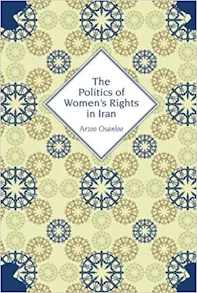
The Politics of Women's Rights in Iran
In The Politics of Women's Rights in Iran, Arzoo Osanloo explores how Iranian women understand their rights. After the 1979 revolution, Iranian leaders transformed the state into an Islamic republic. At that time, the country's leaders used a renewed discourse of women's rights to symbolize a shift away from the excesses of Western liberalism. Osanloo reveals that the postrevolutionary republic blended practices of a liberal republic with Islamic principles of equality. Her ethnographic study illustrates how women's claims of rights emerge from a hybrid discourse that draws on both liberal individualism and Islamic ideals.
Osanloo takes the reader on a journey through numerous sites where rights are being produced—including Qur'anic reading groups, Tehran's family court, and law offices—as she sheds light on the fluid and constructed nature of women's perceptions of rights. In doing so, Osanloo unravels simplistic dichotomies between so-called liberal, universal rights and insular, local culture. The Politics of Women's Rights in Iran casts light on a contemporary non-Western understanding of the meaning behind liberal rights, and raises questions about the misunderstood relationship between modernity and Islam.
 Back to top